Chukum: the Mayan finish that is waterproof by nature
It is the only seamless finish that does not rely on a sealer to resist water. That is why it goes inside a pool, in a fountain, or on a wall that takes rain head-on — where microcement cannot follow.
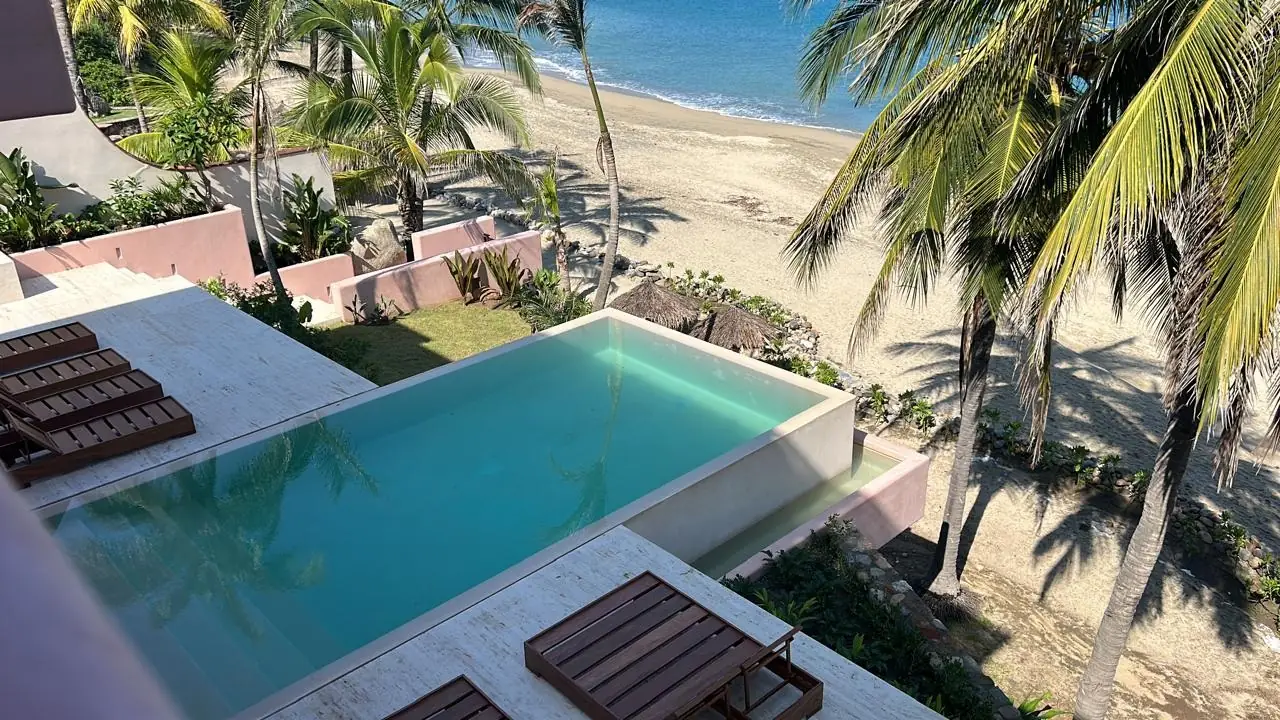
Chukum is a seamless coating of white cement and fine limestone powder, mixed with natural resin from the chukum tree (Havardia albicans), endemic to the Yucatán. It withstands constant immersion by composition, not because of whatever sealer goes on top. It is applied over a pre-wetted rough render and produces warm ochre tones that read green and turquoise under water.
What chukum actually is
Chukum is a tree endemic to the Yucatán peninsula, Havardia albicans. Its bark yields a tannin-rich resin the Maya used to line chultunes and water cisterns. This is not a recent trend: it is a technique with centuries of evidence behind it, against water specifically.
Today it comes as a kit — a 15 kg bag of powder, white cement with extra-fine limestone, and a gallon of natural chukum resin, mixed on site. Our supplier is Chukum Chichén, in Mérida, Yucatán.
How is it different from microcement?
Microcement becomes waterproof thanks to the sealer applied over it; chukum is waterproof by composition. That difference matters wherever water is permanent: when a microcement sealer wears down, the protection goes with it. Chukum is still chukum. That is why the inside of a pool takes chukum, and a high-traffic interior floor takes microcement.
| Chukum | Microcement | |
|---|---|---|
| Waterproofing | By composition | By the applied sealer |
| Constant immersion | Yes | Not advisable |
| Substrate | Pre-wetted rough render | Slab, tile or concrete |
| Coverage | 2.5 to 4 m² per kit | Per manufacturer system |
| Colour range | Natural warm ochres | Virtually any colour |
| Where it wins | Pools, fountains, exteriors | Floors, bathrooms, stairs |
Where it goes
- Pool shells and water features, under constant immersion.
- Fountains and garden water elements.
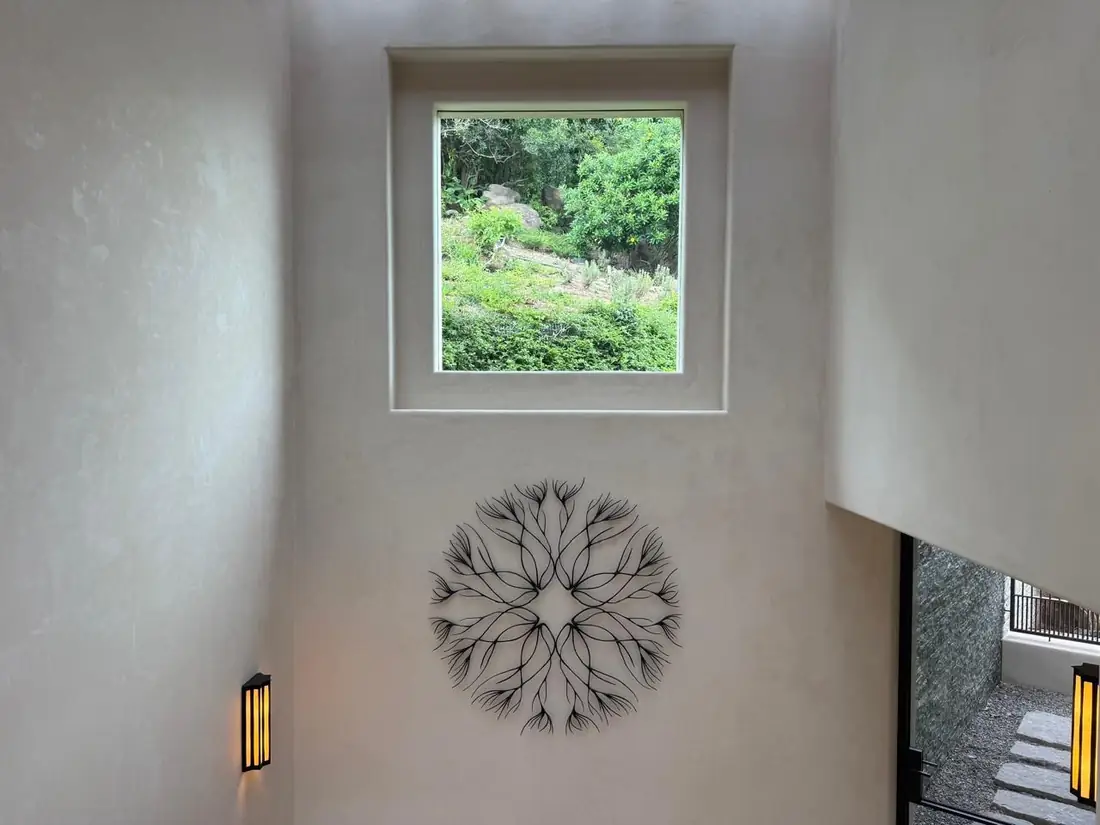
- Interior and exterior walls, including those exposed to direct rain.
- Floors, terraces and high-traffic patios.
- Ceilings, kitchens, bathrooms and countertops.
Why the pool reads turquoise
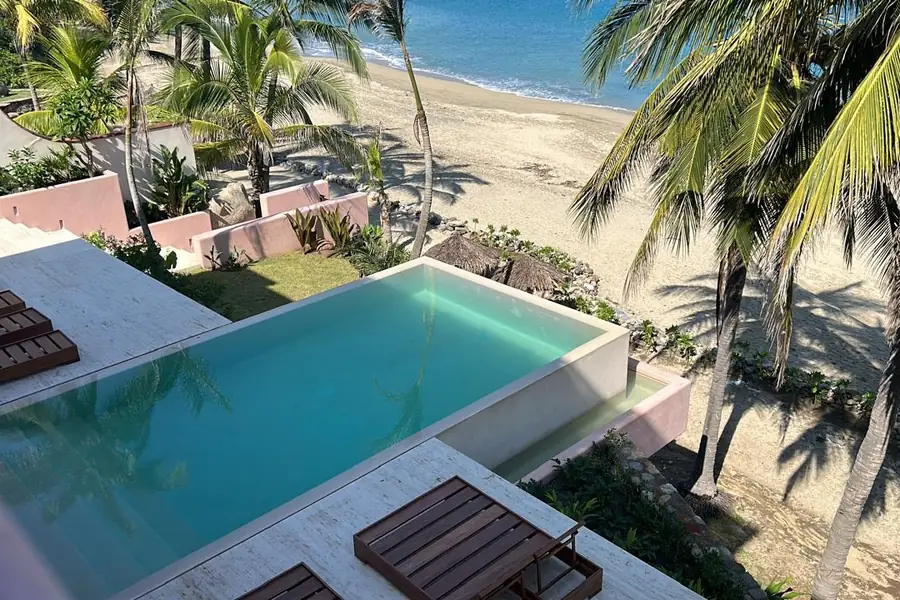
Natural chukum gives a range of warm ochres, from pale sand to toasted terracotta. Under water that warm ground returns greens and turquoises that shift with the time of day and with depth. It is not blue paint: it is the colour of the material read through water.
Like any finish mixed on site, the tone is approved on a physical sample, dry. Wet chukum reads several shades darker than cured chukum, and that gap surprises anyone seeing it for the first time.
How we apply it
Rough render
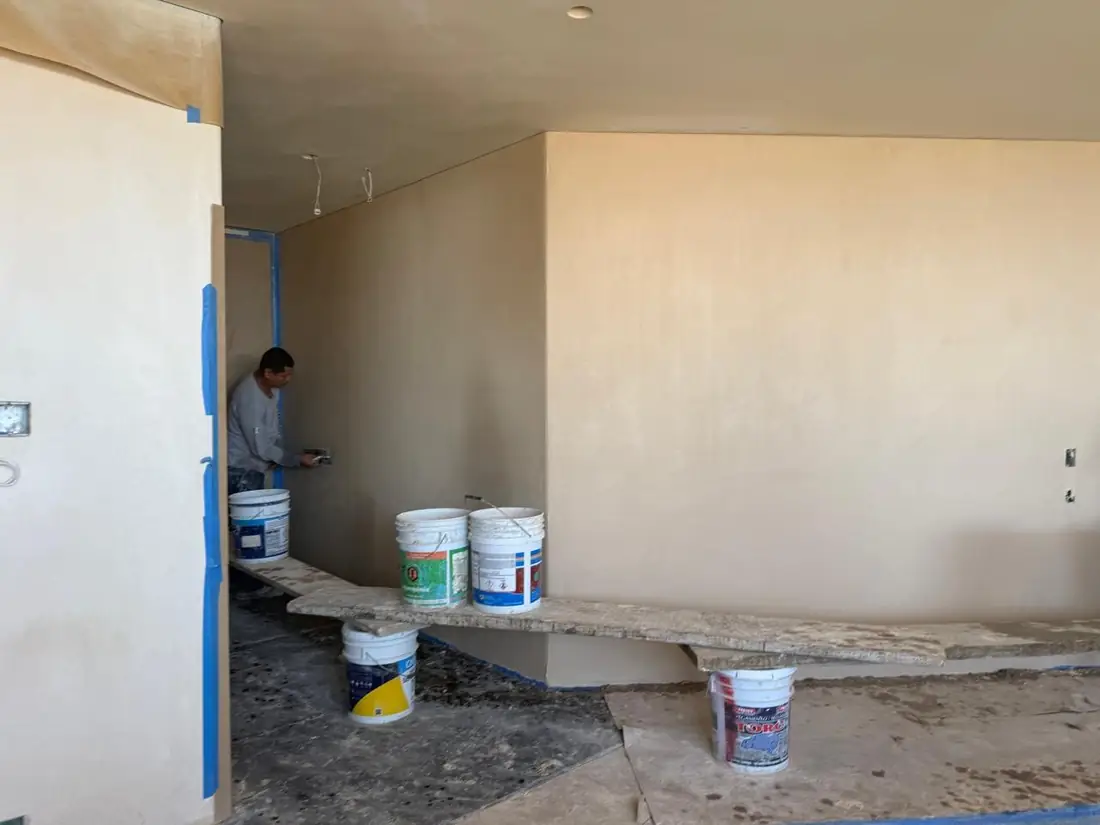
Chukum needs grip. It will not anchor to a smooth or polished surface: we prepare a rough render and, where needed, a bonding bridge.
Wetting
The surface is saturated with water before the first coat. On a dry substrate the mortar loses water too fast and cracks.
Mixing on site
Powder and resin are mixed in the moment, at the manufacturer’s ratio. Every batch has to come out identical — this is where tone differences between panels appear.
Coats and burnishing
Applied in coats and burnished with a trowel as it sets. Burnishing is what closes the pore; it is also where a skilled applicator separates from an unskilled one.
Water curing
Cured by wetting the surface over the following days. It is the step most often skipped and the one that most changes the final result.
Protective topcoat
Depending on use: acrylic sealer, matte or gloss concrete varnish, or yellow wax on floors. In a pool it is not always needed.
What to know going in
It is neither cheap nor fast. Coverage runs 2.5 to 4 m² per kit depending on substrate porosity and thickness, and curing is measured in days. Anyone offering chukum at paint prices is either not using real resin or planning to skip the cure.
It also hides nothing structural. If the pool shell leaks or the wall has rising damp, that gets repaired first. No coating fixes a crack that moves.
Materials we apply
- Chichén · Pasta de Chukum
Frequently asked questions
Can chukum go into an existing pool?
Yes, provided the shell is structurally sound with no active leaks. It is drained, the surface is prepared with a rough render, and the coating is applied. If there is a leak, that gets repaired first: no finish covers a structural crack.
Does chukum tint the pool water?
For the first few weeks it releases some tannin and the water can take a light tint. It clears with the first filtration and exchange cycles. It is normal and temporary, but worth knowing so it is not mistaken for a failure.
How long does chukum last in a coastal climate?
It is among the most durable exterior finishes available here; the Maya used it for water cisterns precisely for that reason. What shortens its life is not the climate — it is poor substrate preparation, a skipped cure, or badly balanced pool water.
What maintenance does it need?
Cleaning with neutral soap, no acids or concentrated chlorine directly on the surface. In a pool, water chemistry is what most affects the life of the finish: neglected pH attacks any coating, chukum included.
Projects where we applied it
Tell us what you need
Finishes or maintenance
Microcement, polished plaster, waterproofing or an annual plan. Send photos of the space on WhatsApp and we will give you a range the same day.
WhatsApp usDesign or new construction
Projects with drawings, permits and a line-item budget. We come back with a formal proposal in under five business days.
Request a quote