Microcement: seamless floors and walls, no demolition
It is the finish we are asked for most on floors, and the one that best solves a remodel: it goes straight over the tile that is already there, without breaking anything.
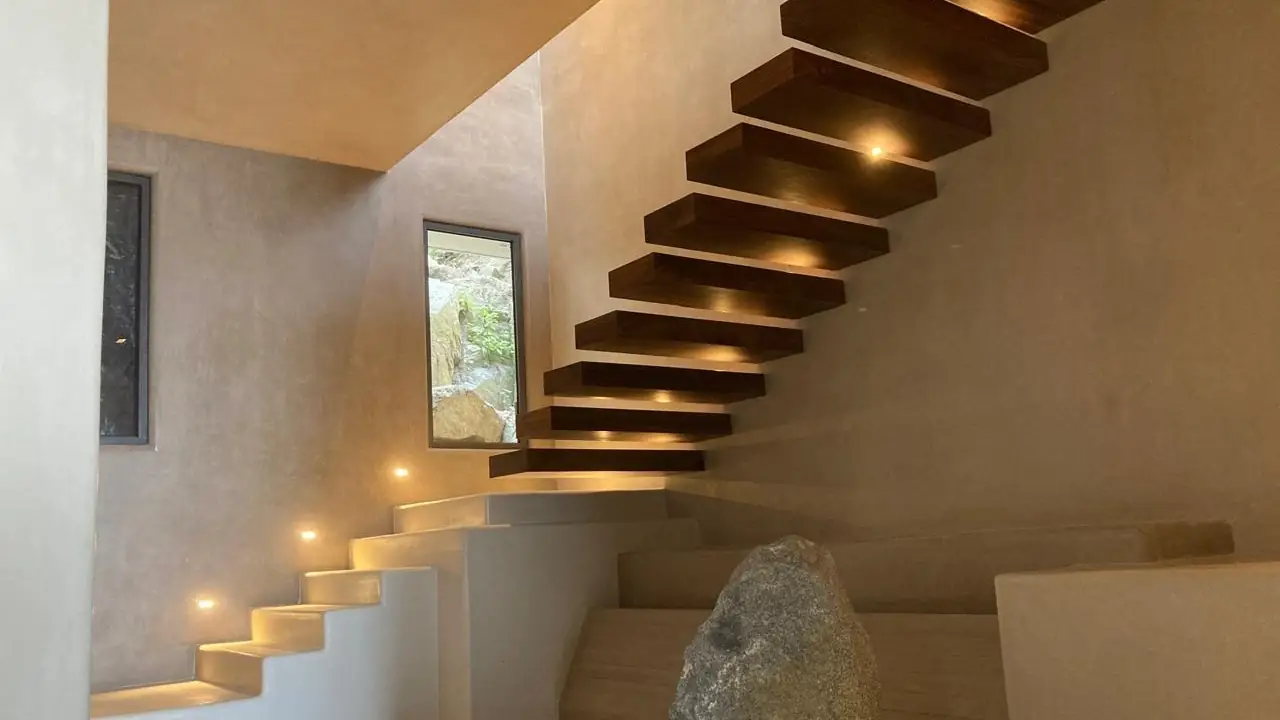
Microcement is a thin-layer system, 2 to 3 mm with a sealer, applied over an existing slab, tile or concrete without demolition. It resists foot traffic and moisture, which is why it goes on floors, in bathrooms and on stairs. ArquiVal applies it with its own crew, with a physical sample approved before starting.
Can microcement go over an existing floor?
In most cases yes, provided the slab is level, free of rising damp and has no loose pieces. It is applied over existing tile or concrete after surface preparation, which avoids demolition and cuts construction time and cost considerably compared with tearing the floor out.
Before quoting we check three things on site: whether moisture is rising by capillary action, whether the slab moves, and whether the existing tile joints are sound. If any of the three fails, we say so and propose a different route. Applying microcement over a damp floor is throwing money away: it delaminates within a year.
Where microcement goes
- Interior floors in any room, kitchens included.
- Full bathrooms: floor, walls and shower trays.
- Stairs and landings.
- High-use walls where polished plaster would fall short.
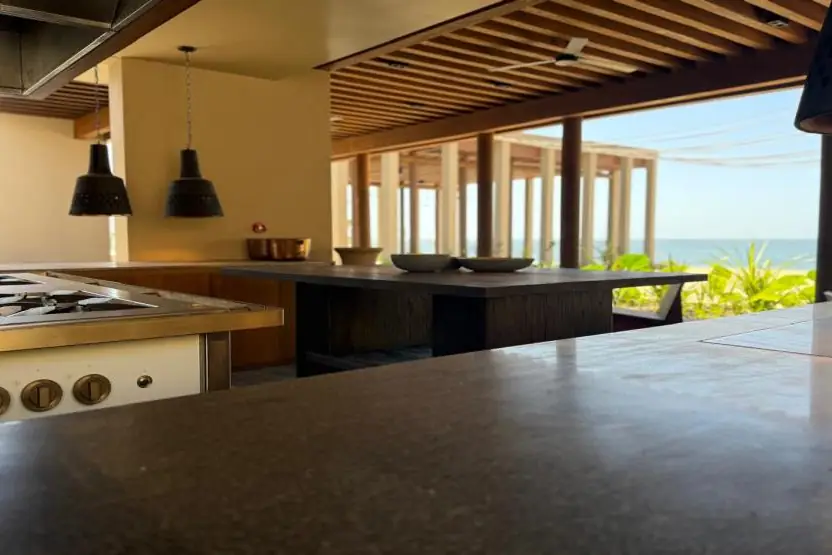
- Countertops and work surfaces, with the right sealer.
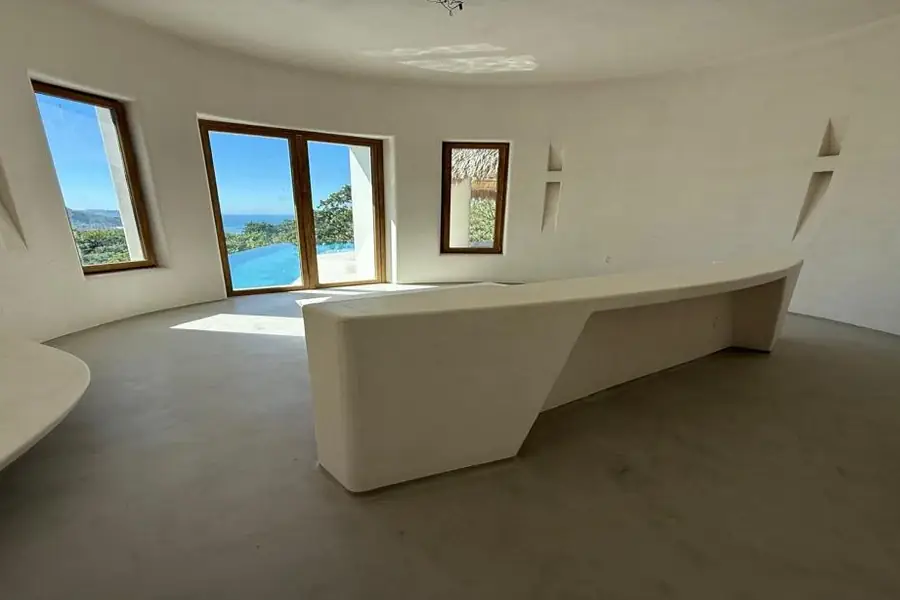
In a whole interior the usual pairing is this: microcement on the floor and the stair, where the traffic is, and polished stucco on the walls, where there is none. They read as one continuous surface because they share a colour family and neither carries a joint, but each sits where its resistance is actually needed. Paying for microcement on a wall nobody walks on is paying for nothing.
Where we do not use it is inside a pool shell. There the protection depends on the sealer, and under constant immersion the sealer wears down. That is what chukum is for — waterproof by composition.
How we apply it
Physical sample
Two or three samples on site, in the real light of the space. Colour on a screen and colour on a wall are never the same.
Substrate preparation
Cleaning, crack repair, priming and levelling. This is 60 per cent of the final result and the step most competitors skip.
Base coat
With mesh at the risk points: junctions, construction joints and material changes.
Finish coats
Two fine trowelled coats. Every coat is logged with a dated photo.
Sealing
Sealer according to use: matte, satin or heavy traffic. Curing takes three to seven days depending on ambient humidity.
Why does microcement crack?
Almost never because of the product. Cracks come from the substrate: a moving slab, a construction joint that was ignored, rising damp, or a base coat without mesh where mesh was needed. That is why we price and explain substrate preparation as its own line item, not as a formality.
Branded systems
Where a project specifies a commercial system, we apply it. Kimikolor, from Mérida, is the most requested in the bay: Kimiplaster for walls, ceilings and countertops, Kimiquartz for walls and floors, both with a pool-rated version, and Kimitop as a floor system. We also work with Corev products.
Materials we apply
- Kimikolor
Frequently asked questions
How long does microcement take in a full bathroom?
Five to eight working days, plus sealer curing. The surface can be walked on two days after sealing, but full cure, when it reaches final resistance, takes about a week.
What maintenance does it need?
Cleaning with neutral soap, and resealing every three to five years on high-traffic floors. On walls, essentially none. In a coastal setting it is worth checking the sealer after each rainy season.
Does it raise the floor level?
Between 2 and 3 mm thick, so the change in level is minimal and the added weight negligible. It is one of the reasons it works so well over an existing floor.
Tell us what you need
Finishes or maintenance
Microcement, polished plaster, waterproofing or an annual plan. Send photos of the space on WhatsApp and we will give you a range the same day.
WhatsApp usDesign or new construction
Projects with drawings, permits and a line-item budget. We come back with a formal proposal in under five business days.
Request a quote